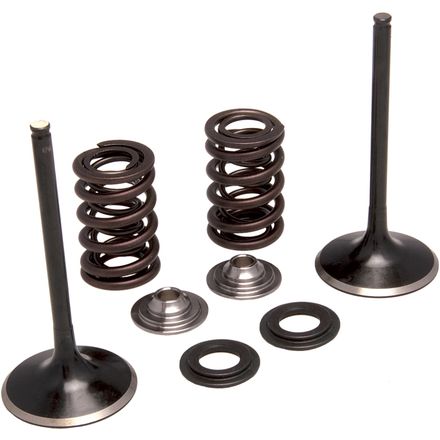
Inlet and Exhaust Valve
Based on Number Of Strokes -
1. Two Stroke Engine -
A Two Stroke engine is a type of IC Engine which completes a power cycle with two stroke (Up and Down movements) of the piston during only one crankshaft revolution.
2. Four Stroke engine -
The 2 Stroke engine which requires four strokes of the piston to complete a power cycle during two crankshaft revolutions. In a two-stroke engine, the end of the combustion stroke and the beginning of the compression stroke happen simultaneously, with the intake and exhaust (or scavenging)functions occurring at the same time.
According to Air-intake Process
1. Supercharged and Turbocharged Engine

Supercharged and Turbocharged engines have some fundamental differences. A supercharger uses crankshaft to drive energy and produce power rather than exhaust stream like in turbochargers. Superchargers are connected directly to the engine via a belt, and thus they can achieve speeds up to 50,000 RPM. Whereas, turbochargers are not directly connected to the engine and can go up to 15,000 RPM. Moreover, Turbochargers are equipped with smog altering instruments that lower the carbon emission, so they are more eco-friendly than superchargers.
2. Naturally Aspirated

Naturally aspirated engine is a type of ICE in which air intake depends solely on atmospheric pressure and does not rely on forced induction through a turbocharger or a supercharger. Many sports cars specifically use naturally aspirated engines to avoid turbo lag. Most automobile petrol engines, as well as many small engines used for non-automotive purposes, are naturally aspirated.
According to the Arrangement of Cylinder
1. OPOC (opposed-piston opposed-cylinder)engine

An OPOC engine consists of two cylinders with a piston at both ends. There is no cylinder head, and thus no valves. Compared to conventional engines, the opposed cylinder opposed piston engine has very low bearing loads, meaning there will be less friction. And since it is quite small in size, it has high power to weight ratio.
2. W Engine
The W engine first came into existence in 1909, when the Anzani three-bank engine powered the Bleriot XI aircraft to cross the English channel. However, the first commercial use of this engine in the automotive industry was achieved by Volkswagen. The W (or double V) shaped engine has three different configurations which are as follows:
- The first configuration consists of three banks of cylinders sharing a common crankshaft. It is also known as broad arrow configuration due to its resemblance to the British broad arrow property mark.
- The second one is four banks of cylinders sharing a common crankshaft. This is also known as a ‘double-V’ engine.
- The third and last configuration features an engine with two banks of cylinders with two crankshafts. The W shaped engines are mostly used in Volkswagen cars, most notably in Bugatti Veyron. 3. V engine
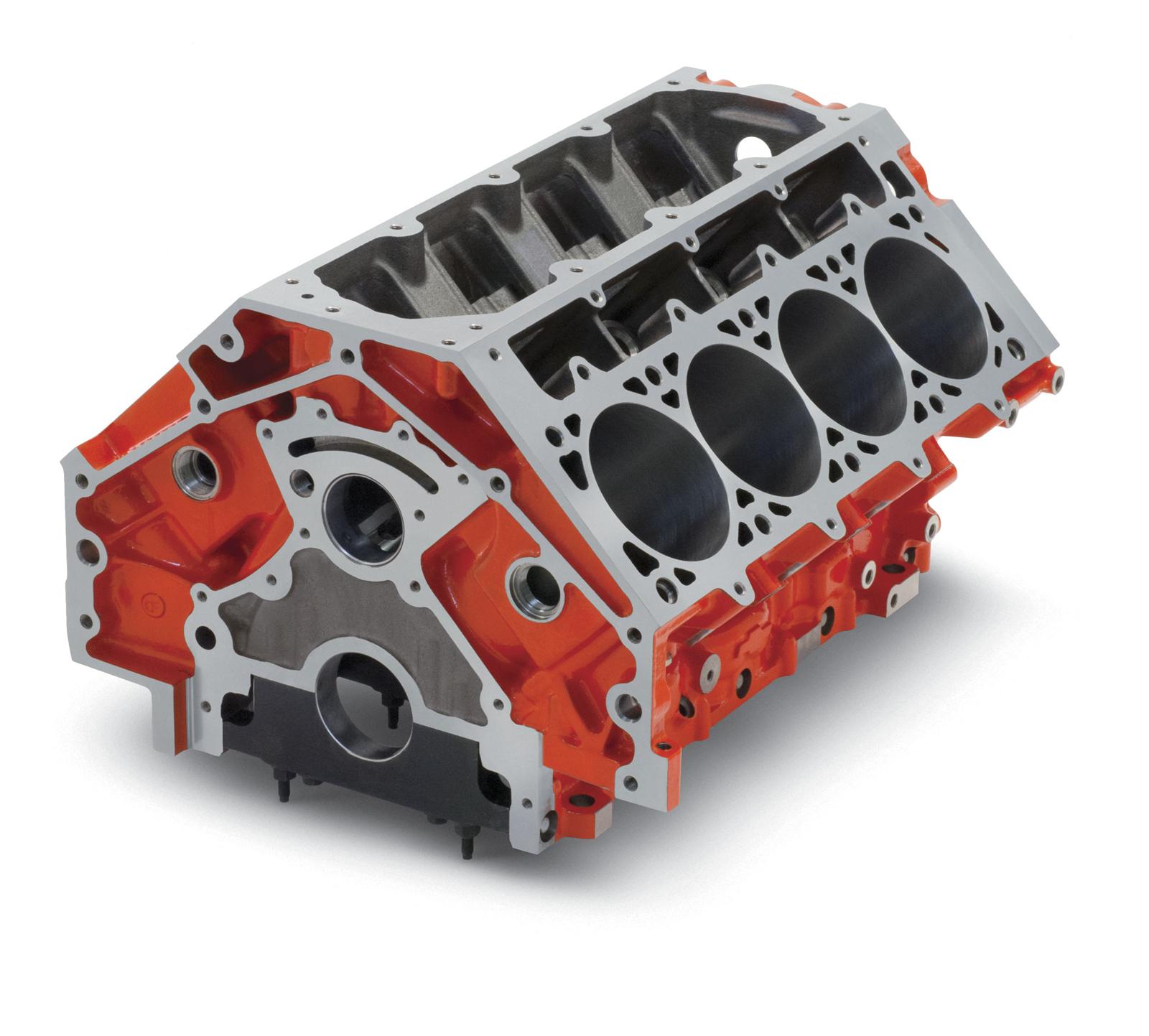
The cylinders and pistons in a V-type engine are aligned in two separate planes, in such a way that they appear to be in a “V” shape when viewed from the top. The unique shape of this engine substantially reduces the overall engine weight and length, compared to inline engines.
4. In-line engine
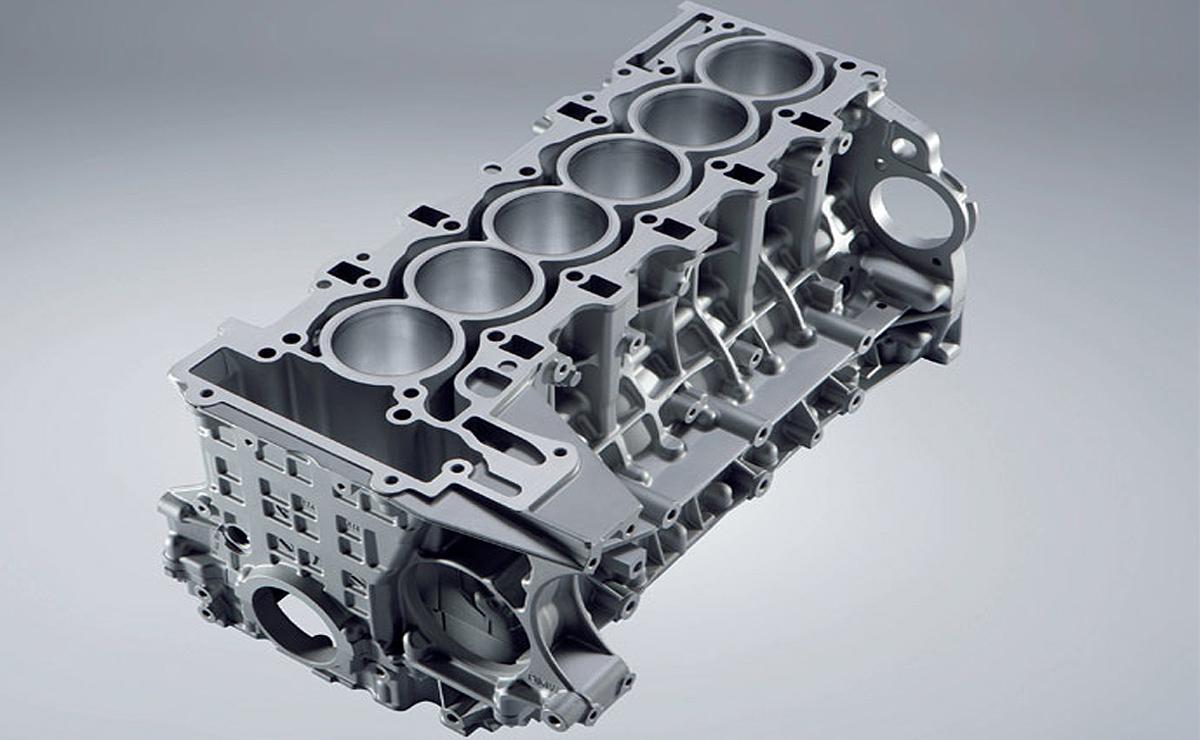
What does it mean when someone says it’s an inline engine? Well, it is just an alignment or the shape of cylinders. In inline engines, cylinders are arranged in a straight line — one behind the other — along with the length of the crankshaft.
Among its three different variants, inline-four is the most popular in the automotive industry as it is compact, fuel efficient and gives a higher power to weight ratio than flat six or eight engines.
Based on Number of Cylinder
1. Single Cylinder Engine
This type of engines has only one cylinder connected to the crankshaft. Single-cylinder engines are compact, lightweight and have a better weight to power ratio. Typically, it is used in motorcycles, motor scooters, dirt bikes, and go-karts. Single cylinder engines are not used in modern-day cars
2. Multiple Cylinder Engine
Multiple cylinder engine is just the opposite of single cylinder variant: the engine has multiple cylinders instead of one. It can be either a 2-stroke or 4-stroke engine, either diesel or spark-ignition. They offer a number of advantages over single-cylinder engines. It is capable of achieving higher revolutions per minute (RPM) and has a superior capability to neutralize imbalances.
Based on Ignition Method
1. Compression Ignition Engine
In compression ignition engine, the combustion of fuel in the chamber is caused by the high temperatures achieved by gas or air due to adiabatic compression. Diesel engine is the perfect example of a compression ignition engine since it works only by compressing the air. There are numerous advantages of having a diesel engine over other internal combustion engines. Higher thermodynamic efficiency and reduced parasitic load on the engine are few of those advantages.
2. Spark-Ignition engine
All petrol engines are based on spark ignition, where the combustion process of the air-fuel mixture is ignited by a spark from a spark plug. Even though spark-ignition engines are commonly referred to as “petrol engines”, they can also run on autogas (LPG), methanol, bioethanol, compressed natural gas (CNG), hydrogen, and nitromethane.
3. Electric Motor
Unlike traditional ICE powered cars, electric cars get power from their preinstalled rechargeable batteries. These batteries not only power the engine, but other electrical equipment too. An electric motor simply converts electrical energy into mechanical energy.
Even-though, electric cars became somewhat popular in the late 20th century, the first ever electric car was produced in the late 1880 s. Since 2008, due to concerns about increasing greenhouse gas emissions and hike in fuel prices, the growth in electric vehicles has seen a positive trend.
Electric motors are more effective than traditional ICE in converting stored energy. They also have higher on-board efficiency than diesel engines. Most electric cars today, either use lithium-ion or lead-acid batteries. Each has their own (dis)advantages.
4. (Homogeneous charge compression ignition) HCCI
HCCI stands for Homogeneous charge compression engine. It is a revolutionary step towards minimizing emissions and maximizing fuel efficiency. The HCCI technology combines characteristics of conventional gasoline engines and diesel engines to produce a hybrid solution.
Although its lesser core temperature (while burning fuel) causes a negligible amount of Nitrogen oxide emissions, it leads to incomplete burning of fuel, which result in relatively high carbon monoxide and hydrocarbon emissions. As of 2017, no HCCI engines are produced commercially. However, we still have several functioning HCCI prototypes.
Design-Based
1. Reciprocating Engine
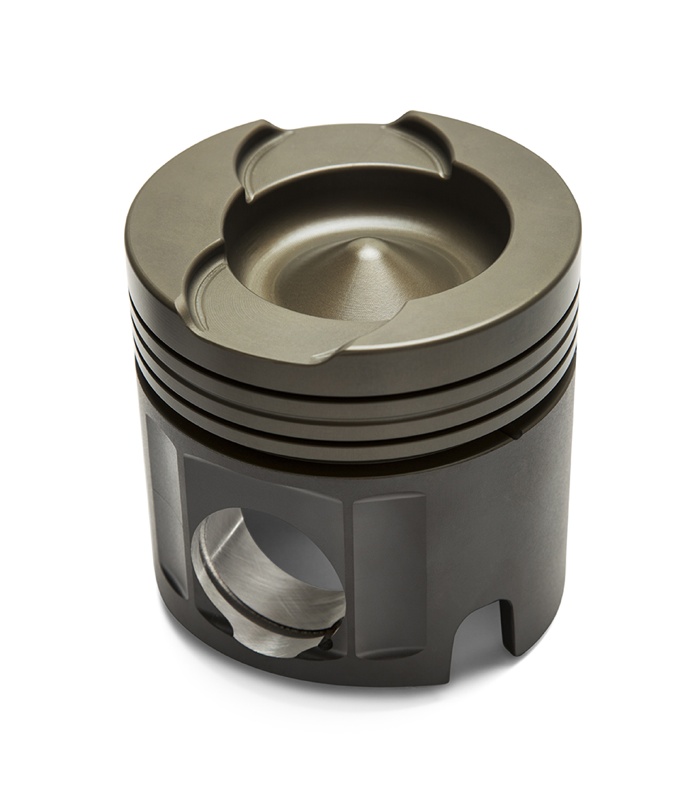
The main component of a reciprocating engine is a piston which is used to convert pressure into rotating motion. There may be one or more pistons in an engine. Each piston is placed inside a cylinder, in which pressurized gas is injected and heated inside the cylinder by ignition of a fuel-air mixture. So the piston starts reciprocating motion (to and fro motion). This reciprocating motion is converted into rotary motion with the help of a crankshaft
2. Wankel Engine
The Wankel engine is also known as rotor engine because it uses an eccentric rotary system (instead of a piston) to convert pressure into rotating motion. It is simpler, smoother and much more compact compared to its more popular competitor reciprocating or piston engine.
Despite the fact that it is mechanically better than pistons, Wankel engines are not typically used in the auto industry. Practically, they are not at all efficient than piston engines. They are plagued with slow combustion, bad fuel economy, and poor emissions problems.
Since Wankel engines produce more power pulses per revolution compared to two-stroke and four-stroke engines, they are generally used in racing cars. The most popular example is Mazda’s RX-8.
Labeling Of Some Parts Of Engine
Working Diagram Of Four-Stroke Engine
Location Of Engine in Car Body
| 





Comments
Post a Comment